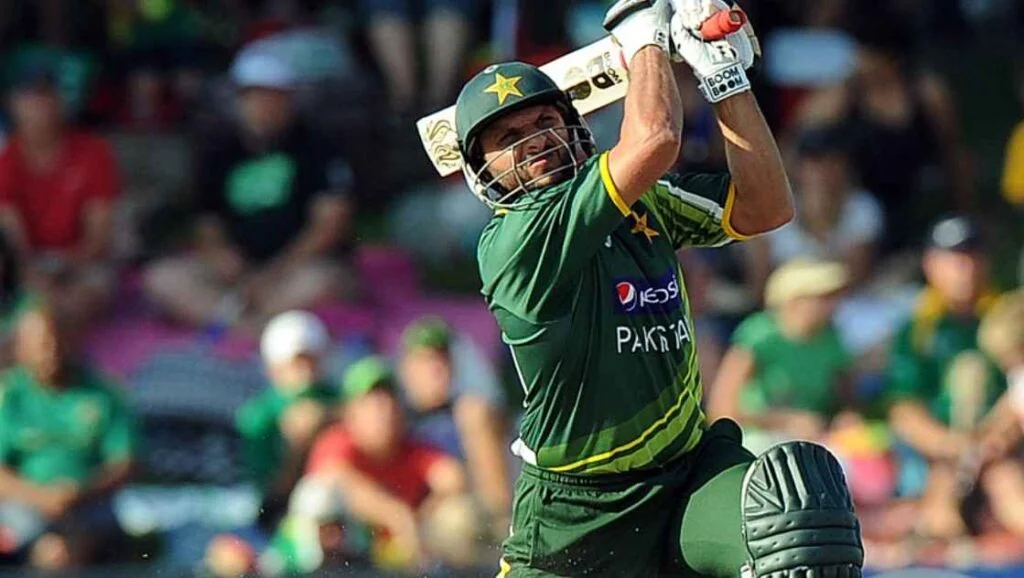

One of the best moments in cricket is when a batsman makes contact with the ball and clears the boundary rope for a six. However, when that six travels a ridiculously long way, it is something the fans will remember for eternity. The longest six in cricket history is about raw power, technique and timing. In this article, we will look into the specific players behind hitting some of the longest sixes in cricket, and how those shots came to light.
What is Longest Six in cricket?
A six in cricket means the batsman has hit the ball over the boundary line and it did not bounce into the ground. The longest six is a shot that crosses the boundary in addition, it travels miles away from the ground landing in stands or fields far from the playing field.
Cricketers, over the years have had some of the biggest six hitting sloggers putting their names into the history books. In this list let us take a look at the longest sixes in cricket history.
Longest Sixes in Cricket History
153 Meters (501 feet) – Shahid Afridi
Shahid Afridi Holder Of The Longest Six In Cricket History He did this first in 2013, playing in Johannesburg against South Africa. We all know Afridi’s explosive batting style, and this six is the proof by power hitting machine.
- Distance: 153 meters (501 feet)
- Opponent: South Africa
- Venue: Johannesburg, South Africa
- Year: 2013
The six hit by Afridi is longest six of all time in cricket history that proved his power and ability to clear boundaries so easily.
Corey Anderson, 0:02:15 – 122 meters (400 feet)
Another hard hitting cricketer from new zealand is Corey Anderson. Anderson smashed a 122-metre hit in a One Day against India in 2014.
- Distance: 122 meters (400 feet)
- Opponent: India
- Venue: Queenstown, New Zealand
- Year: 2014
Andersons six was a turning point in the match that New Zealand would set a formidable target. His pristine striking ability establishes him as a top-half six hitter on the present-day cricket stage.
MARTIN GUPTILL– 127 METERS (417 FEET)
This is yet another big hitter from New Zealand, Martin Guptill who appears next among the longest sixes in cricket history. In a T20I 127 metre six against South Africa Guptill hit.
- Distance: 127 meters (417 feet)
- Opponent: South Africa
- Venue: Hamilton, New Zealand
- Year: 2012
It is one of the longest sixes hit in T20 matches and it just goes to show Guptill needs no help clearing a rope or two.
Chris Gayle – 380 ft (116 meters)
Chris Gayle, the West Indian powerhouse is known for his long sixes in his career. Perhaps one of his distance sixes came in the 2013 IPL when Mahi rattled ball over the ropes a distance of 116 meters.
- Distance: 116 meters (380 feet)
- Opponent: Pune Warriors India
- Venue: Bangalore, India
- Year: 2013
The way Gayle hit six during the match was one of the big features, and he is still regarded as one of the most dangerous batsmen about in terms of hitting big sixes in cricket.
Why Does the Six Travel So Far?
As a result, hitting the longest six is not merely about strength; there are several factors that are responsible for making the ball travel a long distance. So what does it take to strike a six that travels beyond 100 metres?
Bat Speed
This increase in bat speed translates to more impact on the ball because a faster swing produces more power. Batsmen like Shahid Afridi and Chris Gayle now have cricket bat speed down to a fine art.
Perfect Timing
Getting your timing right is a must when clearing the rope for a long six. To hit the ball furthest possible, a batsman must connect with it at the sweet spot of the bat.
Strength and Power
Well hitting long sixes requires a lot of power. Some powerful hitters like Shahid Afridi and Chris Gayle can clear the boundary very easily.
Clean Hit
A batsman, whose ballpiece is clean and does not mis-hit, the ball flies away. Tip-top timing and a clean roll will send the ball soaring.
MEASURING LONG SIXES WITH TECHNOLOGY
Science these days has also developed some high-tech tools to measure the distance and speed of cricket balls. The following discusses some technologies used in cricket to measure the distance of a six.
- Ball Tracking technology which includes high definition cameras and sensors that track the trajectory of the ball and thus allows a measure to be taken.
- Speed Guns: To gauge the speed of a ball as it is struck so that the authority of the shot may be confirmed
- Hawk-Eye: A high-tech camera system that tracks the ball speed and distance travelled.
Longest Sixes Table
Notably, this table lists the longest sixes in cricket history.
| Player | Distance | Opponent | Year | Venue |
|---|---|---|---|---|
| Shahid Afridi | 153 meters | South Africa | 2013 | Johannesburg, SA |
| Corey Anderson | 122 meters | India | 2014 | Queenstown, NZ |
| Martin Guptill | 127 meters | South Africa | 2012 | Hamilton, NZ |
| Chris Gayle | 116 meters | Pune Warriors | 2013 | Bangalore, India |
Conclusion
Cricket has a fine art to it, and the longest six is essentially the premium of power, timing, and technique. Some of this great ball hitting are from players like Shahid Afridi, Chris Gayle and Corey Anderson who have also had the opportunity to smash epic sixers referred to by any versatile fan as an unforgettable second in cricket. From Afridi’s 153-meter six to Gayle’s giant-jacketted 116-meter whop, these moments have just been adding the spice and cheerfulness Plus Luxuriousness of cricket.
With the ever-evolving nature of the sport, more players may arise to pose a threat to these records, but for now, these grand slams will forever serve as an epitome of cricketing brilliance and power hitting at its absolute finest.
The Longest Six in Cricket History 173 Meters — Full Record & Comment


